
WELCOME BONUS 300%
UP TO €2000 + 100
FREE SPINS
UP TO €2000 + 100
FREE SPINS
Home → Roulette
Roulette at Onlyspins Casino
What Doesn't Count as Loss Protection with Zéro?
La Partage rules apply only to even-money outside bets like Red/Black or Odd/Even on the French wheel. Straight, Split, Street, and Corner bets inside the layout do not receive any partial refund when the ball lands on zero. This exclusion means the house edge remains at the standard 2.70 percent for all inner wagers regardless of the table variant.
The En Prison rule offers a similar mechanism by holding the stake for another spin rather than returning half immediately. Both features are strictly limited to same bets placed on the designated even-money zones of the table. Players betting on dozens or columns miss out on this protection because these categories fall outside the specific rule scope.
Consequently, a player facing a loss on a straight-up number bet loses the entire chip amount upon hitting zero. The mathematical expectation drops significantly compared to outside bets where fifty percent of the stake is preserved. This distinction highlights why inner bets carry a higher risk profile despite sharing the same physical wheel.
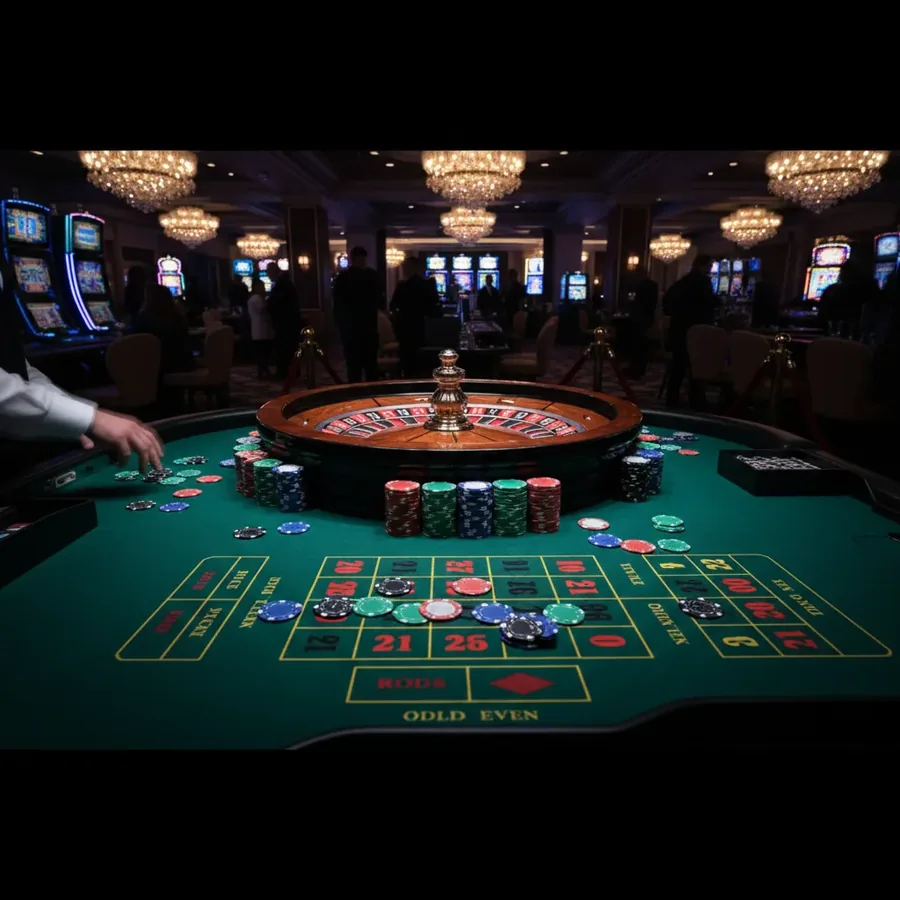
French with La Partage vs European
The French Roulette variant featuring La Partage achieves a house edge of 1.35 percent on even-money bets. This rate is exactly half the 2.70 percent edge found on the standard European wheel with a single zero. The reduction occurs because the casino returns fifty percent of the lost stake whenever the zero sector appears.
European tables maintain a flat 2.70 percent advantage across all betting types including Red/Black, Low/High, and Dozens. Without the La Partage refund mechanism, the player absorbs the full loss on every zero outcome for these specific wagers. This structural difference makes the French version mathematically superior for conservative betting strategies focusing on outside markets.
Inner bets on both wheels share an identical 97.30 percent RTP because neither variant applies special refunds to them. The payout structure remains constant at 35:1 for straight-ups and 8:1 for corners regardless of the table type. Players seeking lower volatility must specifically select French tables and restrict their wagers to the eligible outside categories.
Betting Window Missed: What Happens to the Chip
Quantum Roulette by Playtech allows stakes ranging from 0.10 EUR to 5,000 EUR before each round begins. Once the croupier announces no more bets, any chips placed on the digital interface are rejected automatically. The system locks the betting field instantly to ensure fair distribution of the subsequent quantum multipliers.
Ultimate Roulette by Ezugi imposes the same strict cutoff time for bets between 0.10 EUR and 5,000 EUR. Attempts to add wagers after the window closes result in immediate rejection without exception or grace period. This rigid timing protects the integrity of the live stream and prevents late information exploitation by participants.
Auto Roulette Classic 1 Live by Authentic Gaming operates with fixed intervals that leave no room for delayed entries. Bets must be confirmed within the designated seconds before the wheel starts its automated rotation sequence. Missing this brief window guarantees that the stake remains in the player account rather than entering the active game cycle.
Standard European roulette tables follow similar protocols where the dealer calls 'no more bets' before releasing the ball. Any chip pushed onto the felt after this verbal cue is typically removed by the croupier during the collection phase. This universal rule ensures that all players compete under identical temporal constraints for every single spin outcome.
Mobile Tables: Which Betting Fields Become Smaller
Smartphone screens display a reduced grid layout for Quantum Roulette due to limited horizontal pixel space. The outer betting areas for dozens and columns shrink vertically to accommodate the essential core number grid. Players must tap smaller targets to place split or street bets accurately on these compressed sections.
Tablets offer slightly more real estate but still force a vertical orientation shift for optimal viewing angles. The corner bets become narrower rectangles that require precise finger placement to avoid misalignment errors. This spatial compression affects speed of play as users take longer to confirm complex combination wagers.
Desktop browsers render the full-width betting board allowing simultaneous access to all six-line and column options. Mobile versions often group related bets into collapsible menus to save screen area for the main game feed. This design choice prioritizes visibility of the wheel over the convenience of rapid multi-bet placement.
The Auto Roulette Classic 1 Live interface adapts its control panel to fit portrait modes by stacking buttons. The five-number bet option remains accessible but occupies a disproportionately large portion of the available touch zone. Users must navigate carefully to ensure they do not accidentally trigger adjacent wagering functions during quick sessions.
Statistics: 2.70 Percent of Every Bet
The European wheel generates a consistent house edge of 2.70 percent across all thirty-seven sectors. This figure represents the theoretical percentage of total wagered money retained by the casino over infinite spins. It applies uniformly to straight-ups paying 35:1 as well as even-money bets paying 1:1.
American roulette doubles this disadvantage to 5.26 percent by adding a double zero sector to the thirty-six numbers. The extra pocket reduces the probability of winning on any given number while keeping payouts unchanged at 35:1. This mathematical gap makes the European variant significantly more favorable for long-term bankroll preservation.
Bonus contributions for table games count only ten percent toward the 300% welcome bonus turnover requirement. A 100 EUR wager on European roulette thus contributes merely 10 EUR to the necessary 4,000 EUR turnover target. This penalty multiplier effectively increases the actual cost of clearing the promotion by a factor of ten.
The Five Number Bet on the American wheel carries a severe 7.89 percent house edge, far exceeding the standard limit. This specific wager covering 0, 00, 1, 2, and 3 pays only 6:1 instead of the proportional 9:1 odds suggest. It stands as the most expensive bet on the entire casino floor due to this massive statistical deviation.
Roulette bet types at a glance
| Bet | Payout | Win Chance | Numbers Covered | House Edge |
|---|---|---|---|---|
| Roulette Amerikanisch (doppelte Null, 38 Sektoren) | Straight 35:1, Split 17:1, Street 11:1, Corner 8:1, Six Line 5:1, Dozen 2:1, Column 2:1, Rot/Schwarz 1:1 | 94.74% | 38 Sektoren (1–36 + 0 + 00); Auszahlungen wie beim europäischen Rad, aber der zusätzliche Sektor verdoppelt den Hausvorteil | 5.26% |
| Roulette Amerikanisch – Five Number Bet (0, 00, 1, 2, 3) | Five Number 6:1 (deckt 5 von 38 Sektoren) | 92.11% | Einzige Wette am amerikanischen Rad mit Edge über 5,26% – „Fallenwette“. Kein Äquivalent am europäischen Rad | 7.89% |
| Roulette Französisch mit La Partage (gerade Chancen) | Rot/Schwarz 1:1 (bei 0 Rückerstattung 50%), Odd/Even 1:1, Low/High 1:1; Innere Einsätze ohne La Partage: Straight 35:1, Split 17:1, Street 11:1, Corner 8:1 | 98.65% | Bei 0 wird die Hälfte des Einsatzes auf gerade Chancen zurückerstattet (Rot/Schwarz, Pair/Impair, Manque/Passe). En Prison gibt denselben 1,35%. Regel gilt NUR für gleiche Einsätze | 1.35% |
| Roulette Europäisch (einfache Null, 37 Sektoren) | Straight 35:1, Split 17:1, Street 11:1, Corner 8:1, Six Line 5:1, Dozen 2:1, Column 2:1, Rot/Schwarz 1:1, Odd/Even 1:1, 1-18/19-36 1:1 | 97.30% | 37 Sektoren (1–36 + 0); Auszahlungen wie für 36 Sektoren – daher konstanter Edge auf ALLE Wetten | 2.70% |
| Roulette Französisch, innere Einsätze (La Partage gilt nicht) | Straight 35:1, Split 17:1, Street 11:1, Corner 8:1, Six Line 5:1, Dozen 2:1, Column 2:1 | 97.30% | Rad gleich (37 Sektoren), aber La Partage/En Prison gilt nicht für innere Einsätze – Edge bleibt europäisch | 2.70% |
Payout Table from 35:1 to 1:1
The Straight bet offers a payout ratio of 35:1 for hitting a single number on the European wheel, which contains thirty-seven sectors including one zero. This standard return applies equally to Split bets paying 17:1 and Street bets returning 11:1, establishing a consistent mathematical framework across all corner and line wagers. Players wagering on columns or dozens receive a 2:1 return, while even-money bets like Red/Black pay 1:1 but carry the same house edge as higher-risk positions.
American Roulette introduces a double zero, creating thirty-eight sectors that maintain the same 35:1 payout for Straight bets despite the increased volatility. The Five Number Bet covers five specific sectors (0, 00, 1, 2, 3) with a reduced payout of only 6:1, resulting in a steep house advantage of 7.89 percent. This specific wager structure makes the American variant significantly more expensive to play over time compared to European tables offering identical returns for other bet types.
Quantum Roulette by Playtech modifies standard payouts by applying quantum multipliers up to 500x to winning straight bets during live sessions. While the base payout remains 35:1, these random enhancements can drastically increase winnings for players betting between 0.10 EUR and 5,000 EUR per round. Ultimate Roulette by Ezugi similarly boosts payouts, offering multipliers up to 1,000x that can double to 2,000x, providing substantial variance above the standard RTP of 97.30 percent.
Martingale Fails at Table Limit After 8 Losses
Starting with a minimum bet of 0.10 EUR on Auto Roulette Classic 1 Live, doubling after each loss requires eight consecutive failures to reach the table maximum. After seven losses, the required stake jumps to 12.80 EUR, and the eighth bet demands 25.60 EUR to recover previous losses plus the original unit. Authentic Gaming caps this game at 2,000 EUR, allowing many more cycles, but the exponential growth quickly depletes bankrolls before the limit is ever tested effectively.
Playtech Quantum Roulette allows stakes up to 5,000 EUR, theoretically supporting longer Martingale sequences than lower-limit tables. However, losing eight times in a row starting from 0.10 EUR requires a ninth bet of 51.20 EUR, which is still well within limits. The real danger lies in the frequency of losing streaks; even with high limits, the probability of encountering a run of eight black or red outcomes remains statistically significant over thousands of spins.
Ezugi Ultimate Roulette shares the 5,000 EUR max bet limit, permitting extensive progression strategies without immediate table constraint interference. Yet, the house edge of 2.70 percent ensures that long-term survival is mathematically impossible regardless of the betting system employed. Players chasing losses through doubling will eventually face a losing streak that exceeds their available funds or hits the table limit, rendering the recovery strategy completely ineffective against the built-in statistical advantage.
Latency and Betting Window in Live Stream
Live dealer games like Quantum Roulette feature a brief betting window where players must place wagers before the croupier locks the table. During this interval, latency can prevent timely entries, especially when using slower payment methods or unstable connections. Playtech supports stakes from 0.10 EUR to 5,000 EUR, requiring rapid decision-making to secure positions before the spin begins, adding pressure beyond the inherent risk of the game mechanics.
Auto Roulette Classic 1 Live by Authentic Gaming automates the spin process, reducing human delay but maintaining strict timing protocols for bet acceptance. The game runs on a 37-sector European wheel with a fixed RTP of 97.30 percent, ensuring predictable long-term returns despite the automated nature. Players must monitor the countdown closely, as missed entries result in lost opportunities for the next round, emphasizing the importance of stable internet connectivity for consistent participation.
Ezugi Ultimate Roulette combines live interaction with digital enhancements, requiring players to act within the designated betting phase to qualify for potential multipliers. With stakes ranging from 0.10 EUR to 5,000 EUR, the interface must respond instantly to ensure all valid bets are registered. Any delay in transmission can exclude a player from the current round, highlighting the technical dependencies inherent in live streaming platforms and the need for optimized user environments.
La Partage: What 50 Percent Return Means
French Roulette with La Partage refunds fifty percent of even-money wagers when the ball lands on zero, effectively halving the house edge to 1.35 percent. This rule applies exclusively to Red/Black, Odd/Even, and Low/High bets, leaving inner bets like Straights and Splits unaffected by the partial refund mechanism. Consequently, players betting on outside options enjoy superior odds compared to standard European Roulette, which retains a 2.70 percent house advantage on all positions.
The En Prison rule offers an alternative approach by holding the bet for the next spin instead of immediate refund, achieving the same 1.35 percent house edge. Both mechanisms strictly apply only to even-money bets, meaning Corner bets paying 8:1 or Dozen bets paying 2:1 do not benefit from any protection against zero. This distinction forces players to choose between safer, lower-variance strategies utilizing La Partage and higher-risk inner wagers that lack such safeguards entirely.
Inner bets in French Roulette, such as Streets paying 11:1 or Columns paying 2:1, operate without La Partage benefits, retaining the full 2.70 percent house edge. While the wheel itself features thirty-seven sectors identical to European versions, the absence of partial refunds on inside positions creates a bifurcated playing field. Savvy players minimize exposure by focusing on even-money bets where the house advantage drops significantly, maximizing expected value over extended playing sessions.
Only 10 Percent Contribution: What are the Consequences?
Tischspiele contribute only ten percent toward fulfilling the wagering requirements for the 300% welcome bonus up to 2,000 EUR, significantly slowing progress compared to slots. A 100 EUR deposit yields a 300 EUR bonus, creating a total balance of 400 EUR subject to turnover conditions. If the wagering requirement is forty times the bonus amount, players must generate 12,000 EUR in qualifying bets, with roulette contributions counting at a tenth of the actual stake value.
This low contribution rate means every 10 EUR wagered on roulette only reduces the remaining turnover target by 1 EUR, extending the time required to clear the bonus. Given the 2.70 percent house edge on European roulette, the expected loss during this process is substantial relative to the small credit applied. Players risking large sums to meet targets often lose their entire bonus balance before completion, making the promotion financially unattractive for table game enthusiasts.
Comparing this to games with higher contribution rates reveals the strategic disadvantage of choosing roulette for bonus clearance. While slots might contribute one hundred percent, forcing players to accept higher volatility, table games offer steadier results but negligible progress toward withdrawal eligibility. The combination of slow crediting and persistent house edges ensures that most players fail to convert the bonus into withdrawable cash, highlighting the restrictive nature of the terms attached to the 300% match offer.
What Straight, Split, and Street Practically Mean
Straight bets cover a single number with a 35:1 payout ratio, while Split wagers target two adjacent numbers for 17:1 returns. A Street bet spans three horizontal numbers, offering an 11:1 multiplier on the chip stake. These inner wagers define the core risk profile for players testing specific number clusters on the layout.
The Straight payout of 35:1 contrasts sharply with the Dozen bet at 2:1, which covers twelve numbers simultaneously. This structural difference means the Straight hit rate is significantly lower than the broader coverage of dozens. Players must weigh the higher reward against the reduced probability of winning on any given spin.
The French Roulette variant excludes La Partage rules for these inner bets, keeping the house edge at 2.70%. This stands in contrast to the European standard where the same edge applies but without external refund mechanisms. Consequently, the expected loss per unit wagered remains consistent across both versions for these specific wagers.
Wheel Speed and Ball Toss in Real Wheel
Quantum Roulette by Playtech utilizes a physical wheel with multipliers reaching up to 500x on random numbers. The game accepts stakes from 0.10 EUR to 5,000 EUR, allowing high rollers to engage with enhanced payout potentials. This live format blends traditional spinning mechanics with digital bonus features for increased variance.
Auto Roulette Classic 1 Live by Authentic Gaming employs an automatic wheel mechanism that eliminates manual ball toss variables. It operates on a standard 37-sector European wheel with a fixed RTP of 97.30%. Bets range from 0.10 EUR to 2,000 EUR, ensuring a controlled environment with maximum payouts capped at 35:1.
Ultimate Roulette by Ezugi introduces dynamic multipliers affecting up to five numbers, scaling from 50x to 1,000x. These can double further to reach 2,000x through specific game triggers during live sessions. With betting limits between 0.10 EUR and 5,000 EUR, this table offers significant volatility compared to standard auto-wheel formats.
What Doesn't Count: Red and Black Simultaneously
Increased focus on inside bets reveals that La Partage does not apply to Straight, Split, or Street wagers. This exclusion maintains the standard 2.70% house edge for French Roulette inner bets, unlike even-money outside bets. Players placing chips on individual numbers forfeit the partial refund benefit available on red or black losses.
The American Roulette variant features a 38-sector wheel including a double zero, raising the house edge to 5.26%. This contrasts with the European 37-sector wheel which keeps the edge at 2.70% across all bet types. The additional pocket fundamentally alters the mathematical expectation for every wager placed on the table.
Betting on both Red and Black simultaneously effectively cancels out potential profits due to the presence of the zero pocket. While each bet pays 1:1, the zero outcome results in a net loss equal to the total stake. This strategy highlights the inherent disadvantage built into the wheel design regardless of coverage breadth.
Live Table vs RNG Table: Rounds per Hour
Table games contribute only 10% toward the wagering requirements of the 300% welcome bonus up to 2,000 EUR. This low contribution rate significantly extends the time needed to clear bonus funds compared to slot games. Players must place larger total bets to meet the turnover conditions when choosing roulette over other categories.
Quantum Roulette allows bets up to 5,000 EUR, accommodating high-stakes players seeking substantial win potentials via multipliers. In contrast, Auto Roulette Classic 1 Live caps maximum bets at 2,000 EUR. This difference in limits influences bankroll management strategies and the maximum possible exposure per round in live dealer environments.
Ezugi's Ultimate Roulette matches Quantum Roulette with a 5,000 EUR betting limit, supporting aggressive staking systems. Both tables share a 97.30% RTP, identical to the standard European wheel configuration. This consistency ensures that long-term theoretical returns remain stable despite the added volatility from live multipliers and bonus rounds.
Straight 35:1 vs Dozen 2:1 Hit Rate
A Straight bet paying 35:1 wins approximately 2.70% of spins on a European wheel, requiring roughly 37 attempts for one hit. Conversely, a Dozen bet at 2:1 hits about 32.43% of the time, offering nearly twelve times more frequent success. This disparity defines the choice between high-risk speculation and steady, smaller gains.
The Five Number Bet in American Roulette covers five sectors for a 6:1 payout, yielding a 7.89% house edge. This is the worst value on the floor, exceeding the standard 5.26% edge of other American bets. No equivalent exists in European variants, making it a unique trap for players unfamiliar with American rule sets.
Column bets pay 2:1, mirroring the Dozen payout structure while covering twelve numbers in vertical alignment. Both options share the same 32.43% hit rate on a 37-number wheel. Players often alternate between columns and dozens to manage variance, though the underlying mathematical expectation remains identical for both wager types.
Contact
Live - online chat
Banking









Providers












Onlyspins Casino 2026